
I. Introduction: The Hidden Cost of Dirty Panels
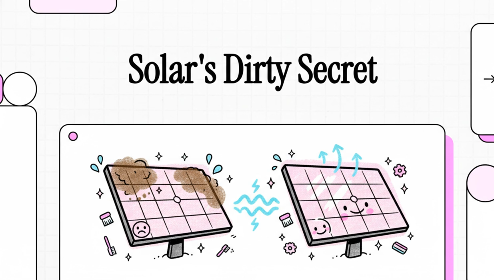
The Reality of Soiling For many homeowners, the appeal of solar energy lies in the promise of a “set it and forget it” investment. However, while solar panels are frequently marketed as “maintenance-free,” the physical reality is that they are constantly exposed to environmental contaminants that degrade performance. This accumulation of debris—technically known as “soiling”—includes dust, pollen, bird droppings, tree sap, and industrial pollution, all of which create an opaque barrier that absorbs, reflects, or deflects sunlight before it can reach the photovoltaic cells,.
In many regions, this isn’t just loose dust that blows away; morning dew can mix with accumulated particulates to form a “cemented” layer that bonds to the glass, making it nearly impossible to remove with rain alone,.
The Financial Stake The impact of soiling on your energy bill is measurable and significant. In the United States, soiling is estimated to cause an annual energy yield loss of up to 7% generally, but this figure can spike dramatically depending on location and season,. For instance, during peak pollen seasons in regions like NoThe Ultimate Guide to Solar Panel Maintenance: DIY vs. Professional Cleaning
Introduction: The Hidden Cost of Dirty Panels
The Reality of Soiling
For many homeowners, the appeal of solar energy lies in the promise of a “set it and forget it” investment. However, while solar panels are frequently marketed as “maintenance-free,” the physical reality is that they are constantly exposed to environmental contaminants that degrade performance.
This accumulation of debris—technically known as “soiling”—includes dust, pollen, bird droppings, tree sap, and industrial pollution, all of which create an opaque barrier that absorbs, reflects, or deflects sunlight before it can reach the photovoltaic cells. In many regions, this isn’t just loose dust that blows away; morning dew can mix with accumulated particulates to form a “cemented” layer that bonds to the glass, making it nearly impossible to remove with rain alone.
To estimate soiling losses specific to your region, consult the NREL Photovoltaic Module Soiling Map.
The Financial Stake
The impact of soiling on your energy bill is measurable and significant. In the United States, soiling is estimated to cause an annual energy yield loss of up to 7% generally, but this figure can spike dramatically depending on location and season.
For instance, during peak pollen seasons in regions like North Carolina, performance losses of over 15% have been observed. In high-soiling environments, such as arid desert regions or areas near heavy agriculture and industry, losses can escalate to between 30% and 50% annually.
Furthermore, research indicates that heavy build-up of airborne pollutants and dust can drop panel efficiency by up to 25% in as little as one to two weeks.
The Core Question
Facing these potential losses, homeowners are left with a critical decision: Should they tackle cleaning as a DIY project to avoid service fees, or do the risks involved necessitate professional help? The stakes are higher than simple cleanliness; solar panel cleaning mistakes—such as using improper water temperatures or abrasive tools—cause over $45 million in damages annually across U.S. residential installations. With the risk of “thermal shock” shattering glass, electrocution hazards, and the potential to void warranties valued at over $10,000, determining the right maintenance strategy is essential for protecting your long-term investment.
II. The Science of Soiling: Why Rain Isn’t Enough
Types of Debris
To understand why simple rinsing is often insufficient, it is necessary to categorize the contaminants—collectively known as “soiling”—that accumulate on solar arrays.
- Particulate Matter: This includes common environmental dust, agricultural soil from tilling, and seasonal pollen. While these particles primarily settle on the glass and reduce light transmission, the impact varies by particle size and roughness. For example, in agricultural regions, heavy pollen counts can cause performance losses exceeding 15% during peak seasons.
- Organic & Sticky Residue: Biological contaminants like bird droppings and tree sap are particularly dangerous because they create “hard shading.” Unlike a uniform layer of dust, these opaque obstructions block specific cells completely, which can trigger “hot spots”—areas where the blocked solar cells overheat, potentially causing permanent damage to the panel’s internal components. Additionally, fungi and mold can thrive in humid environments, acting as a biological adhesive that bonds mineral dust to the glass.
- Chemical & Industrial: In coastal areas, salt spray creates a corrosive layer that requires frequent removal to prevent structural damage. Similarly, in developing areas, construction dust—specifically cement dust—poses a severe threat. When mixed with moisture, cement dust cures onto the panel surface, requiring specialized biodegradable agents to remove without scratching the glass.
The Rain Myth
A common misconception among homeowners is that a good rainstorm will wash solar panels clean. While rain can rinse away loose dust, it is ineffective against sticky biological residues like pollen, bird droppings, or sap.
In fact, relying on rain can be counterproductive. In urban or industrial areas, rainwater often mixes with airborne pollutants and dust to form a slurry; when this evaporates, it leaves behind mineral deposits, dirt streaks, or “spots” that continue to block sunlight. Furthermore, light rain can actually worsen soiling by turning dust into a muddy residue that sticks more stubbornly to the surface.
The “Cementation” Risk
The most persistent threat to solar efficiency is a process known as “cementation.” This occurs when nighttime dew or high humidity mixes with accumulated dust layers on the panel surface. Over repeated wet-dry cycles, this mixture creates a liquid bridge between the particles and the glass, eventually curing into a hard, cement-like crust. Once this layer forms, it bonds tightly to the porous surface of the glass and anti-reflective coatings, making it nearly impossible to rinse off with water alone and often requiring agitation with soft brushes or specialized cleaning agents to remove.
The DIY Approach: Protocols, Risks, and Best Practices
The Appeal
For many homeowners, the primary motivation for do-it-yourself cleaning is cost savings. While professional cleaning services typically range from $150 to $330 per visit, the initial investment for basic DIY equipment is significantly lower, costing approximately $30 to $50. This approach offers flexibility, allowing owners to clean panels immediately following dust storms or pollen events without waiting for an appointment.
Essential Equipment
To clean panels safely without damaging the delicate anti-reflective coatings, specific non-abrasive tools are required:
- Soft-Bristled Brush with Extension Pole: A brush with soft nylon bristles attached to a telescoping pole allows you to reach panels from the ground, eliminating fall risks.
- Mild, pH-Neutral Soap: Use a gentle dish soap or a dedicated solar panel cleaning solution. Highly acidic or alkaline products can damage components.
- Squeegee: A professional-grade squeegee is essential for removing water after rinsing to prevent mineral spots or streaks that block sunlight.
Crucial Safety & Damage Prevention (The “Don’ts”)
Improper DIY techniques are a leading cause of system damage. Strict adherence to the following protocols is necessary to avoid voiding warranties or destroying equipment:
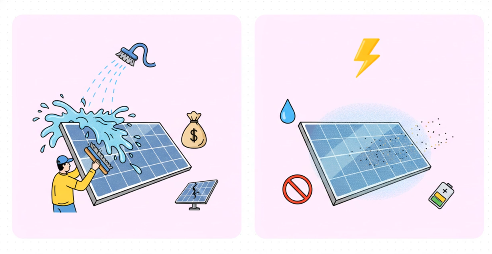
- Thermal Shock: Never clean hot panels with cold water. Tempered glass cannot withstand a temperature differential greater than 80°F; exceeding this limit can cause immediate shattering or microcracks. In one documented case in Phoenix, washing 154°F panels with 59°F water resulted in 11 cracked panels and $9,200 in damages. Cleaning must be restricted to early morning (6–9 AM) or late evening to ensure panel temperatures are safe (<85°F).
- Pressure Washers: The use of pressure washers is strictly forbidden. Water pressure exceeding 40 PSI can destroy the polymer weatherproof seals around the frame, leading to water infiltration, internal corrosion, and short circuits.
- Abrasives and Harsh Chemicals: Avoid steel wool, metal scrapers, or scouring pads, as scratches deeper than 0.004 inches can result in significant efficiency losses. Furthermore, household chemicals like concentrated bleach, ammonia, or toilet bowl cleaners must never be used; these can dissolve seals and corrode aluminum frames within months.
- No Walking: Never stand, kneel, or walk on solar panels. Doing so causes invisible microcracks in the photovoltaic cells that degrade performance over time and can eventually lead to hot spots and fires.
The Hard Water Problem
Using standard municipal tap water or well water is a major pitfall for DIY cleaners. Tap water often contains high levels of dissolved minerals, specifically calcium and magnesium. When this water evaporates, it leaves behind scale deposits (water spots) that cast shadows on the cells, reducing light transmission and potentially causing “hot spots” where energy backs up and damages the cell.
To prevent this, DIYers should use distilled or deionized water, which evaporates without leaving residue, or install a hose filter to reduce mineral content.
IV. The Professional Approach: Benefits and Costs
What Pros Provide
While DIY cleaning is possible for some, professional services offer specialized equipment and protections that go beyond a simple hose-down:
- Deionized Water Systems: Professionals use deionized (DI) water systems, which are purified to remove all mineral content. This allows the water to dry naturally, ensuring a spot-free finish that maximizes light transmission without residue.
- Safety & Insurance: Professional solar cleaning companies carry liability insurance—often up to $2 million—which protects the homeowner from financial responsibility in the event of an accident or damage.
- Inspection Services: Many service packages include a visual “health check” of the system to look for loose wiring, corrosion, and pest damage, addressing issues before they lead to system failure.
Cost Breakdown
The cost of professional cleaning varies:
- Residential: Expect to pay between $150 and $350 per visit for a standard system, or $15 to $25 per panel.
- Commercial: Rates are lower per unit, typically ranging from $2 to $6 per panel.
Specialized Remediation
Construction dust, specifically cement dust, requires specialized biodegradable removal agents that chemically react with and emulsify the contaminant, allowing it to be rinsed off safely. Professionals ensure these stubborn deposits are removed without scratching the glass.—–V. Financial Analysis: Is It Worth It?
The Breakeven Calculation
For residential homeowners, a professional cleaning service costing $200 would require the solar system to generate approximately 1,660 additional kWh just to break even (at $0.12 per kWh). If the efficiency loss is minor (e.g., 5%), the cost of the service call may be greater than the immediate energy savings.
Asset Protection Value
The true financial value of professional maintenance often lies in asset protection. Neglecting cleaning or improper maintenance can void manufacturer warranties valued between $10,000 and $30,000. Maintenance acts as an insurance policy for the system’s longevity, preventing costly “hot spots” and equipment failure.
Commercial ROI
The calculus shifts for commercial operations. A 5% loss in efficiency for a 1 MW solar farm can result in $15,000 to $20,000 in lost annual revenue, making the investment in professional or autonomous robotic cleaning solutions highly profitable.—–VII. The Future of Maintenance: Automation and Technology
Robotic Solutions
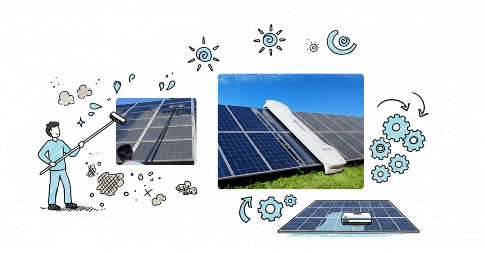
Autonomous robots are being adopted for utility-scale farms, offering waterless cleaning with soft microfiber brushes. In high-soiling environments, these robots can boost energy output by up to 35% and maintain panel efficiency at 99.6% with daily cleaning.
Electrodynamic Screens (EDS)
This technology integrates transparent electrodes onto the glass surface. When activated, it generates a traveling electric wave that electrostatically sweeps dust particles off the panel. It is waterless, durable, and can restore over 95% of the power output lost to dust accumulation, consuming negligible power.
Protective Coatings
Advanced chemical coatings, such as antistatic and anti-soiling coatings, are used to modify the surface chemistry of the glass to prevent dirt from bonding. These coatings can reduce the adhesion of stubborn contaminants like cement dust by up to 60% and create super-hydrophobic surfaces to carry dirt away with water beading.—–VIII. Conclusion: Which Path is Right for You?
Choose DIY If:
- Safety is Assured: Panels can be accessed safely from the ground (e.g., single-story home or ground-mounted system).
- Water Quality: You have access to a deionized water source or a high-quality filtration system to prevent mineral deposits (scale) from hard water.
- Knowledge of Protocols: You are committed to following strict “don’ts,” such as never washing hot panels (to avoid thermal shock) and never using pressure washers or abrasive tools.
Choose Professional If:
- High-Risk Access: Your panels are on a second-story roof, a steep pitch, or in difficult-to-reach areas.
- Specialized Contamination: You are dealing with “hard” soiling issues like bird infestations, lichen growth, or cured cement dust, which require specialized removal agents.
- Warranty Protection: You need documentation of manufacturer-approved cleaning methods to uphold your warranty.
The Verdict
For the average homeowner, a hybrid approach often yields the best return on investment: performing light, safe rinsing with a garden hose (when panels are cool) for maintenance, combined with an annual professional deep clean and inspection. This strategy maximizes energy production while using a professional eye to catch potential issues before they become expensive failures.
Frequently Asked Questions (FAQ)
Q: How often should I clean my solar panels?
A: Most recommendations suggest one to two times per year. In high-dust or high-pollen areas, cleaning may be necessary every 3 to 6 months. Monitor your system’s energy output for unexplained drops, which often indicate cleaning is required.
Q: Can I use a pressure washer to speed up the cleaning process?
A: No. Pressures exceeding 40 PSI can destroy the polymer weatherproof seals, leading to water infiltration, corrosion, short circuits, and voiding manufacturer warranties.
Q: Is rain enough to keep my panels clean?
A: Generally, no. While rain removes loose dust, it is ineffective against “sticky” soiling like bird droppings and sap. Light rain can actually worsen the situation by turning dust into muddy streaks or “cementing” the dirt to the glass.
Q: Can I use tap water to wash my panels?
A: Using tap water is risky, especially in “hard” water areas, as dissolved minerals like calcium and magnesium leave behind scale deposits (water spots) when the water evaporates. These spots reduce efficiency and can cause hot spots. Professionals recommend using deionized or distilled water.
Q: Is it safe to clean solar panels while they are hot?
A: Absolutely not. Cleaning hot panels (which can exceed 150°F) with cold water can cause thermal shock and instantly crack the tempered glass. Only clean panels in the early morning or late evening when the glass is cool (typically below 85°F).
Q: Can I use household glass cleaners (like Windex) or bleach?
A: No. Avoid harsh chemicals, including ammonia-based glass cleaners, bleach, and industrial solvents, as they can damage the anti-reflective coating, corrode the frames, and dissolve rubber seals. Use only a small amount of mild, pH-neutral dish soap if needed.
Q: Will walking on the panels damage them?
A: Yes. You should never walk, stand, or kneel on solar panels. The weight can cause invisible microcracks in the solar cells beneath the glass, which degrade performance over time and can lead to hot spots and fires.
Q: Is professional cleaning financially worth it for residential homes?
A: Professional cleaning is primarily valuable for asset protection: it ensures warranty compliance, prevents permanent damage from hotspots, and protects the system from corrosion and frame damage over the long term, potentially saving thousands in repair costs. The immediate ROI from energy generation alone is often minor.
Q: How do I remove cement dust or paint overspray?
A: Do not scrape it off, as this will scratch the glass. Cured cement requires a specialized biodegradable removal agent that chemically softens the bond so it can be rinsed away. It is highly recommended to hire a professional for this type of heavy construction debris.
rth Carolina, performance losses of over 15% have been observed. In high-soiling environments, such as arid desert regions or areas near heavy agriculture and industry, losses can escalate to between 30% and 50% annually,. Furthermore, research indicates that heavy build-up of airborne pollutants and dust can drop panel efficiency by up to 25% in as little as one to two weeks.
The Core Question Facing these potential losses, homeowners are left with a critical decision: Should they tackle cleaning as a DIY project to avoid service fees, or do the risks involved necessitate professional help? The stakes are higher than simple cleanliness; solar panel cleaning mistakes—such as using improper water temperatures or abrasive tools—cause over $45 million in damages annually across U.S. residential installations. With the risk of “thermal shock” shattering glass, electrocution hazards, and the potential to void warranties valued at over $10,000, determining the right maintenance strategy is essential for protecting your long-term investment,.
External Resources and Official Support
For more in-depth data, technical specifications, and official manufacturer guidance:
- Soiling Data and Technical Resources
- Pollen and Environmental Data: Ambee
- Solar Yield Simulation: PVGIS
- Soiling Code for Analysts: NREL Soiling Code
- Official Manufacturer Support & Warranty
- Tesla Maintenance Guidelines: Tesla Support
- Maxeon / SunPower Safety Manuals: Maxeon / SunPower
- LG Solar Historical Support: LG Solar (Historical Support)
- Safety and Regulations
- Agricultural Worker Safety: EPA Pesticide Registration